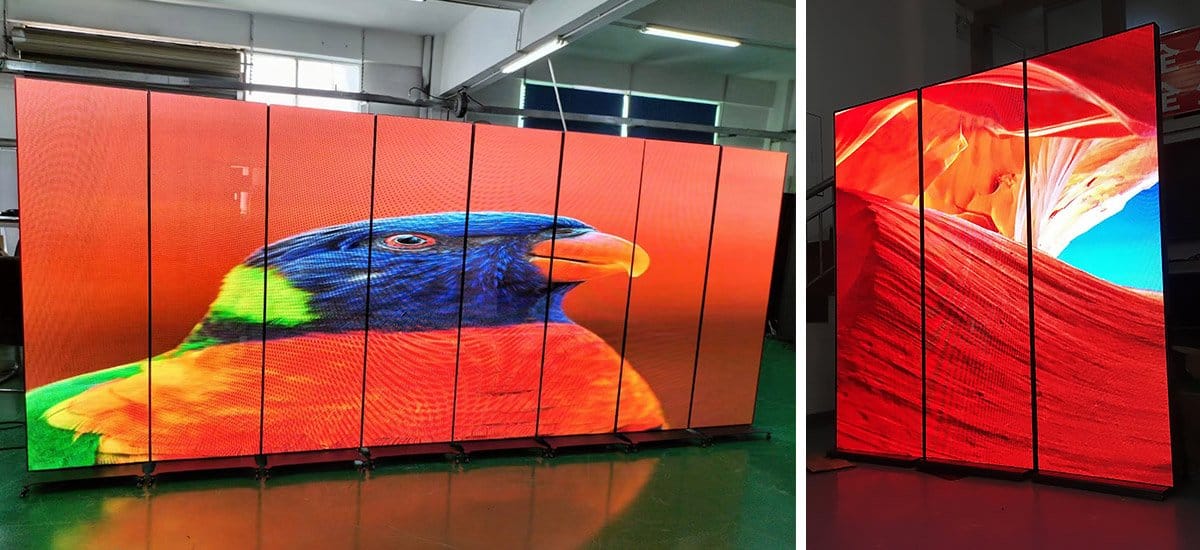
A large LED video wall changes how an audience experiences an event. Not subtly — dramatically. The moment one fills a stage or a conference backdrop, the whole room shifts. People sit up straighter. They pay attention differently. And they remember it afterward in a way they wouldn’t if there’d been a projector screen or a couple of monitors on stands.
We’ve set up large LED video walls for concerts, corporate conferences, TV productions, product launches, and everything in between. So if you’re trying to figure out whether one is right for your event — and what renting one actually involves — you’re in the right place.
We’ll cover sizes, indoor vs outdoor, what’s included in a rental, and the questions worth asking before you commit to anything. No fluff, just the stuff you actually need to know.
What Actually Makes an LED Video Wall “Seamless”
This word gets thrown around a lot. Worth explaining what it actually means.
Most display setups — TVs mounted together, rear-projection screens, even some cheaper LED products — have visible gaps or borders between panels. You can see the joins. Your eye is drawn to them. It breaks the image.
A proper seamless LED video wall is different. The panels are engineered to lock together with virtually no gap between them. The result is one continuous surface — one image, edge to edge, with nothing interrupting it. No bezels, no borders, no dark lines cutting through your content.
When you’re projecting a brand logo across a six-metre wall or running live camera feeds of a performer on stage, that seamless quality isn’t just aesthetic. It’s the difference between something that looks professional and something that looks like it was pieced together at the last minute.
How Big Can It Actually Go?
As big as your venue allows, honestly. That’s not a marketing line — it’s just how modular LED works.
Each panel is typically around 500mm x 500mm. You connect them together horizontally and vertically until you have the size you need. There’s no fixed maximum. We’ve built walls that cover entire stage backdrops and others that fit neatly behind a conference lectern.
Here’s a rough guide to help you visualise:
| Wall Size | Best For | Approx Panel Count |
|---|---|---|
| 3m x 2m | Press events, small conferences, brand stands | 24 panels |
| 6m x 3m | Corporate events, product launches, galas | 72 panels |
| 10m x 4m | Concerts, large conferences, TV productions | 160 panels |
| 12m x 6m+ | Festival stages, arenas, large spectaculars | 288+ panels |
And if you need something that doesn’t fit neatly into a rectangle — curved walls, portrait configurations, L-shapes — that’s possible too. Just describe what you’re working with and we’ll figure out whether it’s doable.
What’s Actually Included in the Rental
This is where companies differ quite a bit. Some quote you for the panels and then add the media server, rigging, and technician as separate line items. Others bundle everything and give you a clear total. We do the latter.
A large LED video wall rental from LED Alliance includes:
- All LED panels and connecting hardware
- Ground support structure or hanging rigging depending on your venue
- Media server and full content playback setup
- Cable management and power distribution
- On-site technician from load-in through to teardown
- Spare panels on standby in case of any failure
- Content formatting help if your files need adjusting for the screen resolution
If you’re getting quotes from multiple companies — and you should — make sure you’re comparing the same things. A cheaper headline number that doesn’t include a technician or a media server isn’t actually cheaper.
If you’re also looking at LED screen rental options for smaller displays or need event lighting to complement your video wall, we handle both — and combining them into one package usually works out better value than sourcing them separately.
Indoor vs Outdoor — They’re Not the Same Product
This catches people out sometimes. An indoor LED video wall and an outdoor LED video wall are genuinely different products, not just the same panels in different locations.
Indoor panels are built for controlled environments. They have tighter pixel pitches — usually P2 to P4 — which means the LEDs are closer together and the image looks sharp even when your audience is standing close to the screen. They’re not weatherproofed and they run at lower brightness because they don’t need to compete with sunlight.
Outdoor panels are a different build entirely. They’re IP65 rated — dust and waterproof. They run at five to eight times the brightness of indoor panels because they have to stay visible in full daylight. And they typically have a wider pixel pitch because outdoor audiences are usually further from the screen.
| Feature | Indoor LED Wall | Outdoor LED Wall |
|---|---|---|
| Pixel Pitch | P2 – P4 | P4 – P10 |
| Brightness | 800 – 1,500 nits | 5,000 – 8,000 nits |
| Weatherproofing | No | IP65 rated |
| Viewing Distance | 2m – 15m | 5m – 50m+ |
| Best For | Conferences, stages, studios | Festivals, outdoor events, sports |
Tell us whether your event is indoors or outdoors from the start. It changes the spec completely and affects the quote.
What to Sort Out Before You Call Us
A few things that make the whole conversation easier and the quote more accurate:
- Venue ceiling height — determines how tall the wall can go and what rigging method we use
- Power supply — large video walls draw significant power; confirm your venue can handle it before anything else
- Load-in access — panels are heavy and come in flight cases; we need to know about stairs, lifts, and loading bays
- Build time — a 6m x 3m wall needs a full day to build and test properly; larger walls sometimes need two days
- Content format — MP4 works for most setups; have your files ready and we’ll confirm the exact resolution specs
- Viewing distance — affects which pixel pitch we recommend; know roughly where your front row will be sitting
Frequently Asked Questions
What pixel pitch should I go for? A simple rule of thumb — divide your closest viewing distance in metres by 1,000 to get your ideal pixel pitch. Front row at 4 metres? A P4 panel works well. We’ll always recommend the right spec based on your actual venue layout rather than just defaulting to the most expensive option.
Can you run live camera feeds through the wall? Yes. IMAG — image magnification — is something we do regularly for concerts and conferences. Your audience at the back of the room sees the same close-up of the speaker or performer as the people in the front row. It needs a camera operator and video switcher in the signal chain but it’s very much standard practice for larger events.
How long does it take to build? A 6m x 3m wall — a full day. Anything above 10m wide — plan for two days of load-in and build. We’ll give you a realistic timeline when we quote so you can sort venue access accordingly. Don’t let anyone tell you a large video wall goes up in a few hours. It doesn’t, not if it’s done properly.
Can I use my own content? Yes and most clients do. MP4, JPEG, PNG — all fine. If your files need reformatting for the screen resolution we’ll handle that. Just flag it early so we have time to sort it before event day.
What if something goes wrong during the event? We bring spare panels to every job. If a panel fails — it’s rare but it happens — the technician swaps it out on the spot. The audience usually doesn’t notice. This is exactly why having a technician on site throughout your event matters rather than just during setup.
Let’s Talk About Your Event
You don’t need a full technical brief to get in touch. Tell us the date, the venue, roughly what size wall you’re thinking, and what you’re trying to display. We’ll take it from there and come back with a clear, honest quote.
You can also follow us on Facebook to see recent setups, event work, and behind the scenes from our installs — it’s a good way to get a feel for the kind of work we do before you commit to anything.
LED Alliance
- 🌐 led-alliance.com
- 📞 +1 310-467-5765
- 📧 steff.jones@productionzync.com
- 📍 13550 Village Park Dr, Suite 310, Orlando, FL 32837
Straight advice. Clear quotes. No surprises on the day.